By Boundless Team

You shipped. Your friends tried it and said it looks great. You posted in Discord and got a few emoji reactions. Then someone you don't know signed up, got stuck on the second screen and left without a word.
Early feedback is hard to get. The people close to you are polite, and everyone else has no reason to spend 15 minutes on a product they've never heard of. A testing bounty gives them a reason. You post a short task, people try your product and show you what happened, and the most useful entries win from a prize pool you set.
This guide shows you how to run one, what it costs and what you'll learn. First, what "100 testers" means here: 100 people who try your product and send you an entry. They aren't 100 users who will stay, and we'll come back to what a bounty can't do.
What a testing bounty is, and who shows up
A bounty is a task with a prize, posted where people look for paid work. A testing bounty asks people to use your product and show you what happened.
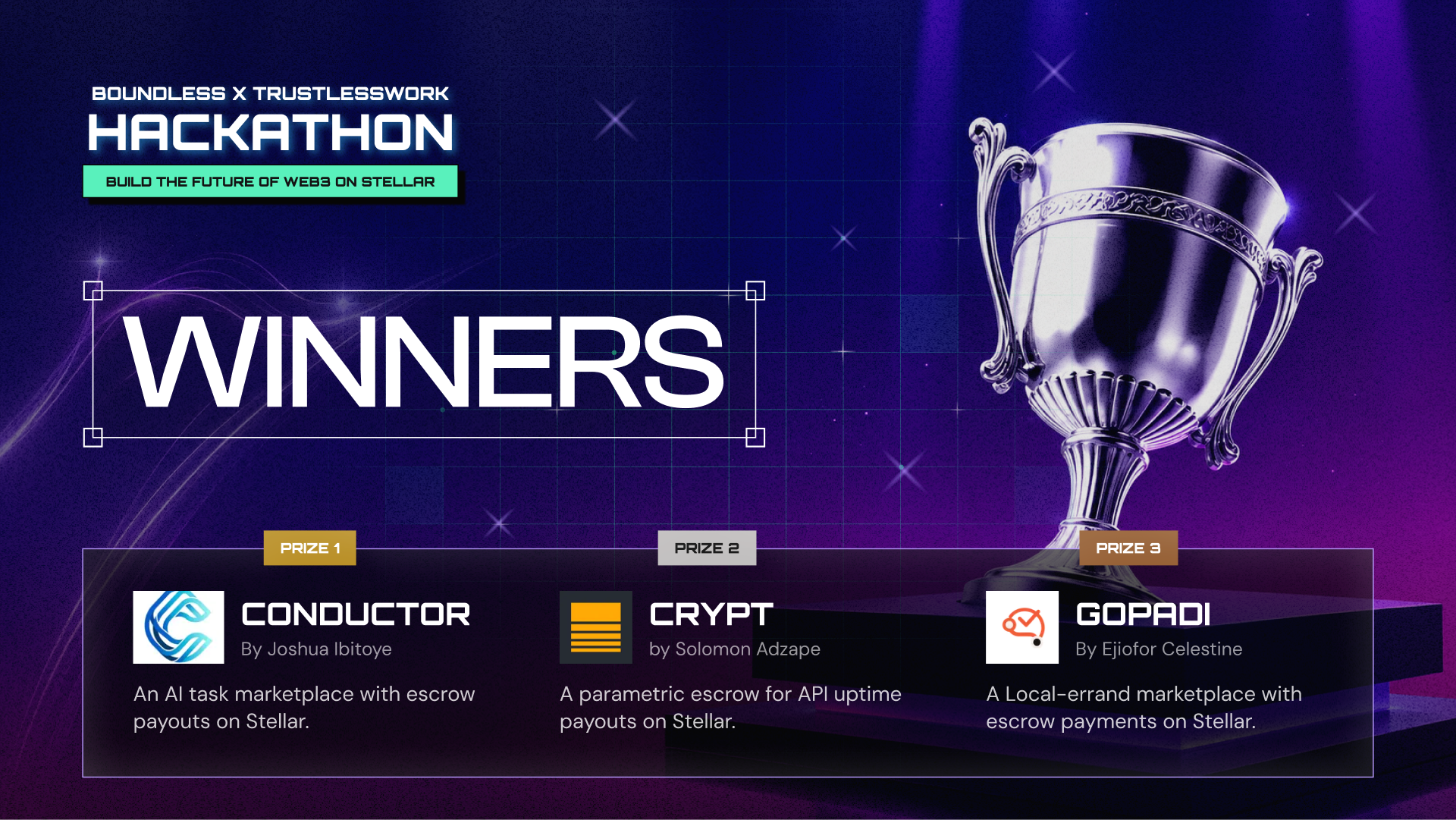
On Boundless, the prize pool is locked in escrow before anyone starts, so testers know the money is there. You review the entries and pick the winners, and they're paid from escrow soon after. In one hackathon on Boundless, all three winners were paid between 15 and 75 seconds after they were picked.
The people who enter are a mix. Boundless has 1800+ public profiles from 46 countries, and nearly half list a skill outside code, such as design, writing or video. That mix helps a test, because most of your users won't be developers either.
Choose the task: more entries or deeper entries
The task decides how many people enter. Quick tasks bring many people. Tasks that take an hour bring fewer people who put in more.
| Test | What the tester does | What you learn | Time it takes them | Entries to expect |
|---|---|---|---|---|
| First-look recording | Records their first 10 minutes, talking out loud | Where new people get confused or give up | 15 to 20 minutes | The most |
| Task-based test | Does three to five set tasks while recording | Whether your main flow works for a stranger | 30 to 45 minutes | Fewer |
| Device and country check | Runs one flow on their own phone and network, and sends screenshots | What breaks on older phones, slow data or local payment methods | 20 to 30 minutes | Many, if you pick testers by application |
| Bug bash | Tries to break it and writes up each bug with steps and a screenshot | Bugs on devices and setups you don't have | 1 to 2 hours | The fewest, with the most detail |
Not every test needs a recording. Ask for one when you need to watch someone think, as in a first look or a task-based test. For a device check, screenshots and the tester's device details are enough. For a bug bash, a written report with steps to reproduce is what your developers need.
To get closer to 100 entries, keep the task under 15 minutes, offer more prize places and share the bounty in your own channels too.
Start with a first-look recording. It's the easiest test to do well, and it shows you the exact moment people get lost. Save the bug bash for a second round, after you've fixed what the first one found.
Write a brief a stranger can finish
Most weak entries start with a weak brief. A stranger can't ask you what you meant, so the brief has to answer it first.
- Give one scenario. "You've just been paid in USDC and want to send $20 to a friend" gets better entries than "explore the app".
- Set three to five tasks in order. Each one should end at a point you can see on screen.
- Don't lead. Ask "what did you expect to happen?" instead of "was that easy?"
- If you ask for a recording, ask testers to think out loud. Hearing someone say "where's the button?" tells you more than any written answer.
- Say exactly what to submit and how you'll judge it.
Copy this and fill in the brackets. It's written for a recorded test. For a device check or a bug bash, swap the recording for screenshots or bug reports.
Title: Test [product] and show us where you get stuck

About [product]: [one sentence on what it does]

Who we're looking for: [for example: people who have never used a crypto
wallet, Android users, people in Kenya]

The scenario: [one sentence the tester can picture, for example: "You've
just been paid in USDC and want to send $20 to a friend."]

Your tasks:
1. [Sign up with a new account]
2. [Do the main action, for example: send $5 to the test address below]
3. [Find something, for example: your transaction history]

How to record: record your screen and talk out loud the whole time. Say
what you expect before you tap, and what surprised you after. Keep it
under [15] minutes.

What to submit:
- A link to your recording (YouTube unlisted, Loom or Google Drive, open
  to anyone with the link)
- Your device, browser and country
- In two or three sentences, the first thing you would change

How we'll judge:
- How clearly you show where you got stuck or confused
- Whether you finish every task, or show exactly where you couldn't
- Specific suggestions over general praise

Prizes: [number] places, [amount] USDC each. Entries without a working
recording won't be considered.

Deadline: [date, time and time zone]
Set prizes that fit the effort
Testers look at two things before they enter: how long the task takes, and how many people can win.
You choose how many places to pay and how much each one gets. For a short recording, more places with smaller prizes give first-time testers a fair chance. Ten places at $30 reads very differently from one prize of $300. For a bug bash, a podium makes more sense, because the best entry is worth far more than the tenth.
Pay for the time you ask for. If the task takes 20 minutes, a winning entry should feel worth those 20 minutes where your testers live.
Organizers pay a 2.5% platform fee on top of the pool, shown before you fund. On a $300 pool, that's $7.50. Entering costs testers no money. Each entry uses 1 credit, and new users get 6 credits when they join.
If fewer entries deserve a prize than you planned for, award the ones that do and turn down the rest. Once your winners have collected their prizes, you can close the bounty, and the money that wasn't awarded goes back to you. You have to decide on every entry first, which protects testers from organizers who walk away.
Keep out bots, farmers and AI filler
Any prize attracts some people who want the money without doing the work. A few choices keep them out.
- Ask for proof that's hard to fake: a screen recording with a voice, screenshots from the tester's own phone, or steps that reproduce a bug. A written review can come from a chatbot in seconds.
- Use an application when you need specific testers. You choose people by device, country or skills from what they tell you before they start.
- Each entry costs 1 credit, and credits are limited, which makes mass entries hard.
- You review every entry, and nothing is paid until you pick winners.
Launch it on Boundless, step by step
- Sign up with email and create an organization workspace.
- Start a new bounty and add your brief. AI can help tighten the wording, and you decide everything.
- Choose who can enter: anyone, a short application or a full application. "Anyone" suits a first-look test.
- Make it a competition, so many people can enter and you pick the winners.
- Add what testers must submit, such as a recording link, screenshots or bug reports, and your judging criteria.
- Set your prize places and the deadline.
- Submit it for review. The Boundless team checks every listing before it can be funded and may send it back with notes.
- Fund the prize pool in USDC. Our escrow contract has held prize money on Stellar mainnet since 27 June 2026.
- Once it's live, ask your community to pass it to friends who haven't tried your product.
Pick winners and turn entries into fixes
When the deadline passes, go through the entries with your published criteria next to you.
- Go through five entries in full before you score anything. The same sticking points will start to repeat.
- In recordings, note every moment someone hesitates, goes back or says "hmm", with the timestamp.
- Score each entry against your criteria and pick the winners. They're paid from escrow.
- Group your notes. If eight people got stuck on the same screen, that's your first fix.
- Fix the top three problems, then tell your testers what you changed.
- Invite your best testers to the next round.
For tests that take days, run a testing quest
A bounty is one task done in one sitting. Some tests need more: a beta that runs for two weeks, a soak on your testnet, or a bug bash with new tasks each day. For those, run a testing quest on Boundless.
In a testing quest, testers apply and you pick who takes part. Tasks open on dates you set, so you can ask for a first look on day one and bug reports on day five. Testers file each bug as a task, with steps and screenshots. And you can pay everyone who finishes the tasks.
What a testing bounty won't do
- It won't give you 100 users who stay. People try your product because of the prize. If a few stay, treat that as a bonus.
- It doesn't replace a security audit. If your product holds people's money, get one.
Before you publish: a checklist
- One scenario and three to five tasks, each with a clear end point
- No leading questions
- The proof you need, named: a recording, screenshots or bug reports
- What to submit, listed exactly
- Judging criteria written into the brief
- Number of places and the amount for each
- A deadline with a time zone
- Entry type chosen: anyone, or an application for a certain device or country
- You've done every task yourself on a fresh account
- Someone on your team has time set aside to go through the entries
To run your first test, host a bounty. If you'd rather have help, send us a brief and we'll set it up with you.
Share this on:
Want early access?
Get early access to the latest tools, hackathons, and builder programs inside the Boundless ecosystem.